Welcome to LTL freight shipping 101

On this page
What is LTL shipping?
Freight classification and packing tips
#keep-shipments-moving-with-freight-classification-and-packing-tips
Why choose FedEx Freight?
FedEx Freight shipping guides and tools
Glossary of freight shipping terms
Contact support
What is LTL (less-than-truckload) shipping?



Keep shipments moving with freight classification and packing tips
Get familiar with freight classification
National Motor Freight Classification® (NMFC) codes are industry standards around shipping and pricing. They help carriers determine pricing, handling, and liability.

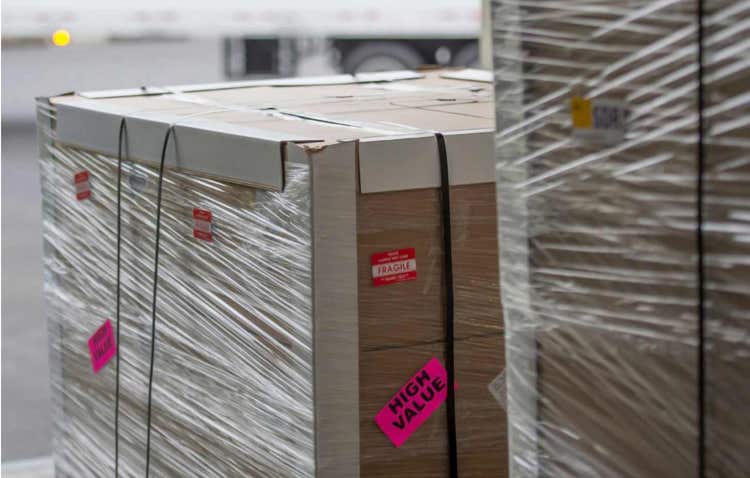
Learn how to pack LTL shipments
The larger the shipment, the more strategic your packing approach should be. No worries—detailed FedEx Freight shipping guides make on-point packing easy.
Why choose FedEx Freight for LTL shipping?


FedEx Freight shipping guides and tools








Glossary of freight shipping terms
Accessorial fee
A fee applied to freight shipments for additional services. For example, liftgate service, hazmat handling, or reclassification.
Ancillary fee
Additional costs which may apply when you select a value-added solution to manage a shipment’s special clearance needs. The specific solutions may differ by country, depending on if additional processing is required by a local regulatory agency or if you or your importer request special processing from a FedEx Freight customs broker.
Automated commercial environment (ACE)
A commercial trade processing system used by U.S. Customs to automate border processing, enhance border security, and support economic security with lawful international trade and travel. This system helps enforce trade and contraband laws and efficiently process goods to expedite the customs process.
Automated export system (AES)
The system used by the U.S. government to collect data on exports. Exporters are legally required to use it when filing Electronic Export Information for each shipment.
Bill of Lading (BOL)
A document used to ship less-than-truckload (LTL) freight. You can also create a freight label online, which means easier record keeping and shipment tracking.
A Bill of Lading has several purposes:
• It acts as your receipt and shipping label.
• It contains the details of your shipment, including content, origin, and destination.
• It serves as a legal contract of carriage with terms and conditions of FedEx Freight® shipments.
• It’s used to calculate charges.
• It includes the purchase order number, freight classification, and other reference numbers.
An online Bill of Lading can be used for any shipment type in any scenario, but when it's an International, Hazmat, Shipper Load and Count, customers must provide a paper copy of their BOL to the FedEx Freight driver upon pickup, even if the shipment was created online. You can also download a blank Bill of Lading form, complete the editable fields, and print it. Or you can print it and fill it out by hand. Give the Bill of Lading to the FedEx Freight driver who picks up your freight shipment. They give it to your recipient upon delivery.
Blind shipment
The shipper and/or consignee (receiver) doesn’t know who sent or received the goods. Blind shipments keep supplier details confidential. It’s commonly used for drop shipping, third-party logistics, and wholesale distribution.
Billing address
The address connected to a customer’s payment account.
Bonded warehouse
The customs-controlled facility used for the retention of imported goods upon their entry into the country. Goods that have not been formally cleared by customs are held here until the duty fee is paid. These facilities are used by businesses to help improve cash flows, since the assessment of duty and tax is applied once an order is ready to leave the location.
Broker
An individual or party that acts as a professional agent for the exporter and/or importer, facilitating the customs clearance process on their behalf and working to resolve delays or issues if they arise.
Bureau of Industry and Security
A federal agency under the U.S. Department of Commerce which regulates the export of most commercial items.
Caged shipment
A secure holding area where a shipment remains until the correct information is obtained to finalize customs clearance.
Carriage value
See definition for Declared Value.
Certificate of origin
A document that certifies the country/territory where the product was made (i.e., its origin). This common export document is needed when shipping to many international markets. It may be required to obtain preferential tariff treatment under several Free Trade Agreements.
Claim
If a shipment is lost, damaged, or missing items, the shipper can file a claim. FedEx Freight may initiate a trace to locate the shipment or determine when it was damaged. The shipper can log in to their account to track the claim.
Commerce-control list
A list maintained by the Bureau of Industry and Security, designed to identify whether your product has an Export Control Classification Number (ECCN).
Commercial invoice (CI)
The primary document used by most international customs agencies for import control, valuation, and duty determination. This document is prepared by the shipment’s exporter. Shipment importers require this document to prove ownership and arrange payment of duties and taxes.
Commodity
An item that has commercial value, and is reasonably interchangeable with other items of the same type. Most non-document shipments are commodities, and therefore require a Commercial Invoice for customs clearance.
Compliance
The state of adhering to all the rules and regulations that govern the exporting and importing of goods across borders, as determined by government agencies.
Consignee
A person or company who receives the shipment.
Consignor or Shipper
The person or company shown on the Bill of Lading (BOL) as consignor or shipper of the property received by carrier for transportation.
Customs broker
An agent that works on behalf of the exporter and/or importer to help shipments clear customs by minimizing delays and holdups. If a delay does occur, this agent works to resolve it, saving the exporter and/or importer the hassle of resolving it themselves.
Customs clearance
The process in which customs, the government service responsible for administering international trade laws, inspects and regulates every shipment to make sure the contents comply with the importing country or territory’s regulations. Every time you ship internationally, you’ll need to take a few additional steps to prepare your shipment for the customs clearance process.
Customs declaration
A document that traditionally accompanies exported goods and includes information such as the nature of the goods, their value, the recipient, and the shipment’s ultimate destination. This document accompanies all controlled goods being exported under the appropriate permit.
Customs hold
A pause or stop in a shipment’s progress through the customs clearance process, enacted by customs agents who require additional information or wish to examine the shipment further. Final clearance remains pending for shipments while in this state. A hold can occur for a variety of reasons: Additional documents may be required or customs officials may need a further explanation of the shipment contents and/or their intended use. An intentional or random shipment inspection may also occur during this state.
Customs value
The total value of all items in a shipment, which determines how much the recipient must pay in duties. For example, if the exporter is shipping five handbags each valued at $200 USD, they should enter a customs value of $1,000 USD.
Dangerous Goods
Dangerous Goods are commodities that, when transported, pose some form of danger to people, animals, the environment, or the carrier. Dangerous goods can be either acceptable or unacceptable for shipping. The latest list of Dangerous Goods can be accessed at www.ecfr.gov. Also see Hazardous materials.
There are nine classifications of Dangerous Goods that identify the type of danger each possesses. These are grouped into categories called accessible and inaccessible which determine the FedEx Freight Service you can ship with.
Declared value
The maximum liability assumed in connection with a shipment, including loss, damage, delay, misdelivery, nondelivery, misinformation, any failure to provide information, or misdelivery of information relating to the shipment.
It is the shipper’s responsibility to declare value, and that is the maximum liability. It is also the shipper's responsibility to prove actual damages. Any loss in excess of the declared value is assumed by the shipper.
You may transfer this risk to an insurance carrier of your choice through the purchase of an insurance policy. FedEx Freight does not provide insurance coverage of any kind.
Denied parties
Individuals, companies and organizations whose export privileges have been denied by the Department of Commerce’s Bureau of Industry and Security. These parties appear on the bureau’s Denied Persons List. American companies and individuals may not participate in export transactions with these parties.
Density
Density is defined as weight per volume and is usually expressed in pounds per cubic foot. Density is also described as the heaviness of an object compared to its size (dimensions). For example, a car engine is more dense than a Styrofoam block of the same dimensions.
Density is the main characteristic used to classify shipments for rating purposes. A shipment's density calculation helps the carrier bill for the shipment's weight and the amount of space it uses in the truck.
A low-density shipment (large but lightweight) may be billed at a higher rate than if the shipment were billed by its weight alone.
Detention fee
A fee applied when a truck is held at a pickup or delivery location for longer than the allotted free time. Common reasons for detention fees include delays in loading or unloading shipments and additional paperwork.
Dimensional weight (dim weight)
Dim weight is the amount of space a shipment occupies in relation to its actual weight. For each shipment, you are charged based on the dimensional weight or actual weight of the shipment—whichever is greater.
Documents and forms
Also known as customs documents, these include information needed for international shipping. Depending on what and where a customer is shipping, certain documents may be required. See a list of available FedEx Freight forms.
Domestic shipping
Domestic shipping refers to shipping a shipment via a carrier within a country's borders. For example, in the U.S., this includes shipments sent within all 50 states, DC, and Puerto Rico, as it is considered a U.S. territory.
Drop off
FedEx Freight locations where you can drop off freight.
Dual-use item
An item that has both a commercial use and a potential military application, as determined from a political or diplomatic perspective.
Duties and taxes
Fees collected on importing and exporting goods. Duty is charged to keep competition fair by bringing the cost of imported goods up to the same cost as those produced within the importing country. The person or business receiving the shipment is legally obliged to pay duties unless the sender has agreed to accept these charges in the contract of sale. Duties are also sometimes known as tariffs.
Electronic export information (EEI)
The electronic data that serves as a declaration of merchandise leaving the U.S. for export to a foreign country. This data is filed in the Automatic Export System (AES) and includes information about the sender, recipient, and goods being exported. The EEI is used for export control and official U.S. export statistics.
Electronic trade documents (ETD)
An automated international shipping solution that allows you to submit your customs documentation electronically so you no longer need to print multiple copies.
Employer identification number (EIN)
A nine-digit number assigned to a business by the IRS, used to confirm the business’s license and identify it for tax purposes. A business may need to obtain an EIN for a variety of reasons, including (but not limited to) if it has employees, operates as partnerships or corporations, has tax-deferred pensions plans or operates under a number of other circumstances.
End of business day
When business operations close for the day. FedEx Freight usually stops delivering at 8 p.m. local time.
Export
A shipment transported out of a country/territory.
Export administration regulations (EAR)
Laws that govern the export of items that are intended for commercial use, but could potentially be used for military purposes.
Export broker
See definition for Customs Broker.
Export control classification numbers (ECCN)
Alphanumeric codes used to identify “dual-use items,” or items that have both a commercial use and a potential military application. Knowing the correct ECCN for a commodity can help you determine whether or not you need an export license in order to ship it internationally.
Export license
A government document permitting participation in the export of designated goods to certain destinations.
Free trade zone (FTZ)
A geographic area where goods may be landed, stored, handled, manufactured, or reconfigured and re-exported under specific customs regulations, generally without being subject to customs duty.
Freight
Any shipment over 150 lbs. is considered freight. Freight shipping is the transportation of goods, commodities and cargo in bulk by ship, aircraft, truck, or intermodal via train and road. It can be transported domestically or internationally by land, air, or sea.
Freight classes
Freight classes are an LTL freight shipping industry standard. They’re set by the NMFC tariff, which is a publication for motor carriers containing rules, descriptions, and ratings of all commodities. Your LTL freight class helps determine your shipping cost. It’s calculated based on how difficult your commodity is to ship and how much liability is involved.
Freight forwarder
A company that gathers shipments from many companies, consolidates them, and purchases space on ocean carriers and/or airlines to move the collection as one large shipment. These companies can arrange the entire shipment movement from pickup to end delivery, complete with prepaid shipment labels, required customs documentation, and customs brokerage.
Fulfillment center
Location where a product is packaged and made ready for delivery.
Harmonized code
A six-digit code belonging to an international nomenclature system (The Harmonized System) designed to classify traded goods on a common basis for customs purposes. Including the correct Harmonized Code on your Commercial Invoice for international shipments can help prevent delays, fines, and/or more expensive tariffs.
Hazardous materials
Hazardous materials, also called hazmat, are substances or chemicals that pose a health hazard, a physical hazard, or harm to the environment. Hazardous materials are defined and regulated by the U.S. Environmental Protection Agency (EPA), U.S. Occupational Safety and Health Administration (OSHA), U.S. Department of Transportation (DOT), and U.S. Nuclear Regulatory Commission (NRC).
High-value shipping
If you're shipping items like valuable artwork, your declared value will be higher. See the FXF 100 Series Rules Tariff for more information on declared value maximum liability.
Import
A shipment brought into one country/territory from another.
Importer of record
The entity or individual responsible for ensuring that legal goods are brought into a country/territory in accordance with the given region’s laws. This party is also responsible for filing the required customs documents.
In transit
FedEx Freight updates the status of a shipment during shipping and delivery. The status "in transit" means that your shipment is on its way to its final destination. It does not necessarily mean that your shipment is in a moving vehicle such as a truck. It may be at a FedEx Freight facility.
Incoterms
A set of rules published by the International Chamber of Commerce (ICC) to define the responsibility of sellers and buyers during international transactions. This term is an abbreviated way to say “International Commerce Terms.”
Insulated shipping
Packaging used to ship temperature-sensitive products, like food, to deliver product freshness.
International traffic in arms regulations (ITAR)
Laws governing the export of items created as military/defense items and space-related technology.
Landed cost
This is the total cost of a landed shipment to a buyer. It includes the purchase price of the item, transportation cost, insurance, and duties and taxes up to the port of destination. Landed costs are also known as "total landed costs" and "delivered price."
Lead time
The time it takes for a shipment to arrive from point A to point B. For example: The time from a customer placing an order, to the arrival of that order at the customer’s doorstep. This includes order processing, manufacturing, and shipping time. Our shipping service portals can help lead you to specific transit information.
Less-than-truckload (LTL)
An LTL (less-than-truckload) freight shipment consists of goods, commodities, or cargo that weighs more than 150 lbs. It's usually palletized. And as its name suggests, it's shipped via truck and requires only a portion of the trailer space.
Liftgate
A liftgate is a platform on the back of a truck that raises and lowers freight between the ground and the trailer. It's used if there's no loading dock at the freight pickup or delivery destination. If you need a liftgate at pickup, you can request one when you schedule your pickup. If you need one at the delivery destination, you can add it when you create your online Bill of Lading.
Linear feet
Linear feet of freight is measured as floor loaded or is considered to be floor loaded, regardless if the shipment can be stacked.
Logistics
The coordination of transportation and storage of goods from the origin location to the delivery location. Analyze what you’re shipping, where it’s going, and when it needs to be there to create a logistics scenario that meets your schedule and your budget.
Net rates
The final shipping cost you pay after all fees, surcharges, and discounts are applied.
Non-resident importer (NRI)
A company or organization located outside of Canada that ships goods to customers in Canada and assumes responsibility for customs clearance and other import-related requirements. Non-resident importer status allows non-Canadian companies to become approved importers of record for goods brought into Canada and pay any assessed duties and/or taxes.
Offshore Market
When a shipment originates in or is destined to Alaska, Hawaii, Puerto Rico, or to the U.S. Virgin Islands.
Order fulfillment
Order fulfillment is the complete process from point of sales inquiry to delivery of a product to the customer. Sometimes, it describes the narrower act of distribution or the logistics function. In the broader sense, it refers to the way firms respond to customer orders.
Other regulatory agencies (ORA)
A designation of governmental agencies that help govern the importing and/or exporting of goods, but are not customs agencies themselves. For example, the U.S. Food and Drug Administration and the U.S. Fish and Wildlife Service both shape international trade through non-customs roles.
Packaging
Packaging is the process of providing a protective and informative covering to the product in such a way that it protects the product during material handling, storage, and movement and provides useful information to all the concerned parties about the content of the package.
Packaging optimization
Changing the size and shape of packaging to reduce wasted space.
Packing list
A document prepared by the exporter that lists detailed packing information about the goods being shipped. It usually includes the dimensions and weight of the shipment contents, as well as information about how the goods were packed.
Pallet
Pallets are portable platforms used for handling, storing, and shipping products. A pallet provides a sturdy base for stacking multiple items, and it’s constructed to make it easy to move with a forklift or pallet jack. Pallets can be made of wood or plastic.
Parcel
A package or envelope under 150 lbs. and includes anything that isn’t freight.
Peak season
For our LTL freight customers, there are two peak seasons: Their busiest months are April through May and September through October.
Pedimento
The customs clearance document required for shipments entering or leaving Mexico. A pedimento is issued by a Mexican customs broker. It ensures payment of duties and taxes and compliance with import or export regulations.
Perishable shipment
The International Air Transport Association (IATA) defines a shipment as perishable if its contents will deteriorate over a given period of time if exposed to harsh environmental conditions, such as extreme temperatures or humidity. Seafood, dairy, plants, meat, fruits and vegetables, and live tropical fish are all examples of perishable shipments.
Pickup
Request from a customer for FedEx Freight to pick up a shipment from a specific location.
Power of attorney (POA)
A legal document that authorizes one party to act on another’s behalf in private affairs, business, and other legal matters. This document is sometimes also known as a Letter of Attorney.
Pro forma invoice
A document prepared by the exporter prior to sending out a shipment, informing the buyer of the goods to be sent, their value, and other key specifications.
Pup
One trailer not to exceed 29 lineal feet of loading space.
Recipient
A person or business that is receiving a shipment.
Schedule B code
A 10-digit number based on the Harmonized Commodity Description and Coding System (HS), which is used to classify physical goods for export to another country. Every physical product has a Schedule B code.
Shipper
The person, firm, or corporation shown on the Bill of Lading as a consignor or shipper of the property received by carrier for transportation.
Shipper's export declaration (SED)
Now known as Electronic Export Information. An official U.S. government document that assists in trade regulation and serves as a census record of U.S. exports. This form is required for all U.S. exports with commodities valued at US $2,500 or higher. The shipper fills out this form with the value, weight, consignee, destination, and other details about their export shipment, as well as Schedule B identification numbers.
Shipper's Load and Count (SLAC)
Shipper's Load and Count means the shipper is responsible for loading the freight into the trailer and counting the items. The driver doesn't help load the shipment or verify the item count. SLAC is often used when a customer is moving valuable or temperature-sensitive items. Or if they want to save on labor costs by using their own staff and processes. SLAC customers still need a traditional Bill of Lading.
Shipping label
A shipping label contains the information a carrier needs to get your shipment from its origin to its destination. It includes a scannable barcode with a tracking number that enables the carrier to provide delivery updates.
Surcharge
A surcharge is an additional charge added to a good or service to the initial price. For example, surcharges are applied to shipping during peak season.
Tariff
Also called customs duty, a tariff is a tax levied upon goods as they cross national boundaries, usually by the government of the importing country. The words tariff, duty, and customs can be used interchangeably.
Temperature-controlled shipping
Maintaining a certain temperature range during shipping for products like pharmaceuticals and perishables. FedEx Freight and FedEx Custom Critical offer a range of temperature-controlled services, including room-temperature shipping, refrigerated/cold shipping, and frozen shipping.
Terms of sale
The point at which a product’s sellers have fulfilled their obligations to a shipment, so the shipment is said to have been delivered to the buyer. Terms of sale are shorthand expressions that set out the rights and obligations of each party when transporting the goods.
Thermal packaging
Packaging that maintains a specific temperature during transportation.
Third party
Any party other than consignor, shipper, or consignee (or affiliates) identified on the Bill of Lading.
Tracking
The process of capturing, reporting, and identifying where a shipment is in the shipping process. Tracking usually involves a code composed of numbers and/or letters that is unique to the shipment, which can be entered into the tracking system to check the status of the shipment.
Trailer
One unit of equipment not exceeding 29 lineal feet of loading space.
Truckload (TL)
A quantity of freight weighing 20,000 lbs. or more, or occupying one pup or more, or whose TL rate or rating is subject to a minimum weight of 20,000 lbs. or more.
USMCA certificate of origin
A document required to claim preferential duty-free treatment for goods traded between the U.S., Mexico, and Canada.
Volume services
If your large-volume LTL freight shipment isn’t urgent, you can take advantage of unused truckload space and save. FedEx Freight are for shipments between 4,000 and 44,000 lbs. They must require at least 10 ft. (up to 56 ft., or two full pup trailers) of trailer space.
Need help? We've got your back—big-time.