Freight class calculator
Learn about LTL (less-than-truckload) classifications and how to calculate them.

img-icon-large

button-action-link
verticalCenter
false
transparent
img-icon-large

button-action-link
verticalCenter
false
transparent
img-icon-large

button-action-link
verticalCenter
false
transparent
What is an LTL freight class/NMFC code?
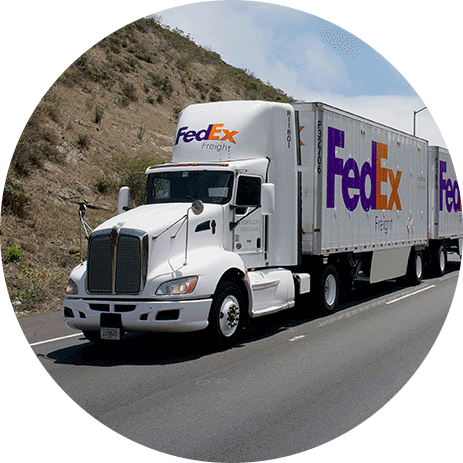
Your less-than-truckload (LTL) freight shipping class is a number established by the National Motor Freight Classification (NMFC). It’s also known as your NMFC classification or NMFC code.
Your LTL freight class helps determine your shipping cost.* It’s calculated based on how difficult your commodity is to ship and how much liability is involved.
img-full-width

button-primary
horizontalLeft
false
transparent
Classes are an LTL freight shipping industry standard. They’re set by the NMFC tariff, which is a publication for motor carriers containing rules, descriptions and ratings of all commodities.
img-full-width
button-primary
horizontalLeft
false
transparent
Why is LTL freight class important?
You’ll need your LTL freight class code in order to get a rate quote or create an online LTL freight shipping label or Bill of Lading.
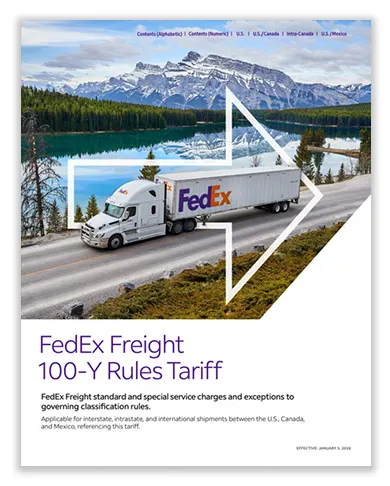
If you don’t include your LTL freight class, or don’t use the right class, it’s usually caught when your shipment is inspected. Then your class and shipping rates are adjusted accordingly. Incorrect classification may add fees to your shipment costs. See items 980 and 981 in the FXF 100 Series Rules Tariff for more information.
img-icon-large
button-primary
horizontalLeft
false
transparent
How to determine LTL freight class
LTL freight class is calculated according to your commodity's transportation characteristics, including:
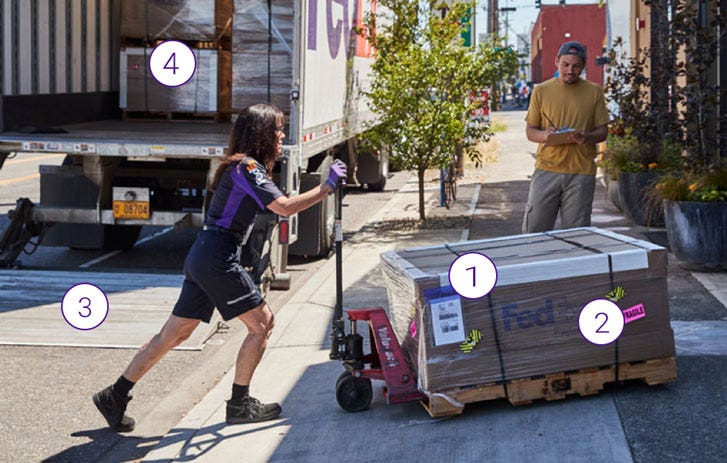
Density: How much it weighs in relation to its size
img-icon-small

button-primary
horizontalLeft
false
transparent
Liability: Its value and whether extra security precautions are needed to safeguard it against theft
img-icon-small

button-primary
horizontalLeft
false
transparent
Handling: If it requires special loading equipment or precautions
img-icon-small

button-primary
horizontalLeft
false
transparent
Stow-ability: How it fits in the trailer with other freight
img-icon-small

button-primary
horizontalLeft
false
transparent
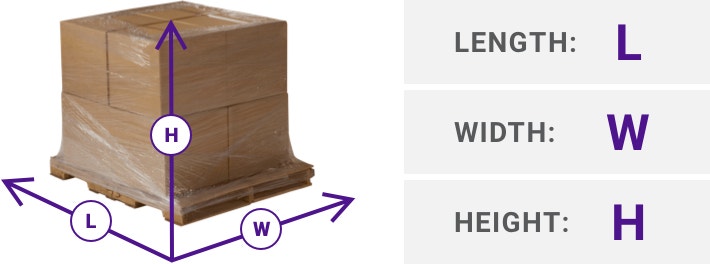
How to calculate density:
img-actual-size
button-primary
verticalLeft
false
transparent
img-actual-size

button-primary
horizontalLeft
false
transparent
img-actual-size

button-primary
horizontalLeft
false
transparent
img-actual-size

button-primary
horizontalLeft
false
transparent
Sub
Density range
Class
1
Less than 1
400
2
1 but less than 2
300
3
2 but less than 4
250
4
4 but less than 6
175
5
6 but less than 8
125
6
8 but less than 10
100
7
10 but less than 12
92.5
8
12 but less than 15
85
9
15 but less than 22.5
70
10
22.5 but less than 30
65
11
30 but less than 35
60
12
35 but less than 50
55
13
50 or greater
50
There are 18 classes, numbered 50 to 500. A lower class number generally means a lower shipping
cost because your item is easier to ship.
cost because your item is easier to ship.
Note: When you ship items with different classes on the same pallet, the shipment defaults to the highest class of those items. For example, if you're shipping car accessories (class 60) with car covers (class 100) on the same pallet, the entire pallet is class 100.
img-icon-medium

button-primary
horizontalLeft
false
transparent
How to use our LTL freight class and density calculator
STEP 1
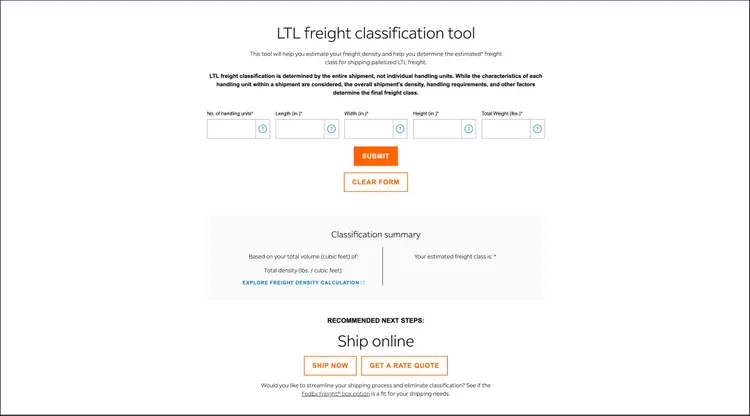
Our FedEx Freight Classification Tool is an easy freight class/NMFC code lookup tool with a freight density calculator built in that can help you estimate your LTL freight class.
STEP 2
Measure your freight and enter the length, width, height and shipment weight.
Note: when you weigh your shipment, include the pallet or other packaging.
YOUR LTL FREIGHT CLASS CALCULATOR RESULTS
Your estimated LTL freight class number* will be displayed on the screen. As mentioned above, there are 18 classes, numbered 50 to 500. Your actual class will be based on your commodity’s demonstrated transportation characteristics.
Once you've determined your LTL freight class, take the next step.
img-icon-medium

button-action-link
horizontalLeft
false
transparent

If you have questions about your LTL freight’s class, please call FedEx Freight Customer Support at 1.866.FXF.4LTL or your local FedEx Freight service center.
img-icon-medium

button-primary
horizontalLeft
false
transparent
false
*Please note: Your LTL freight’s actual classification, as established in the National Motor Freight Classification™ (NMFC™), will be based on your commodity’s demonstrated transportation characteristics, including density, stowability, handling and liability. If you have questions about your LTL freight’s actual classification, please contact FedEx Freight Customer Support at 1.866.FXF.4LTL, your local FedEx Freight service center or the National Motor Freight Traffic Association.